
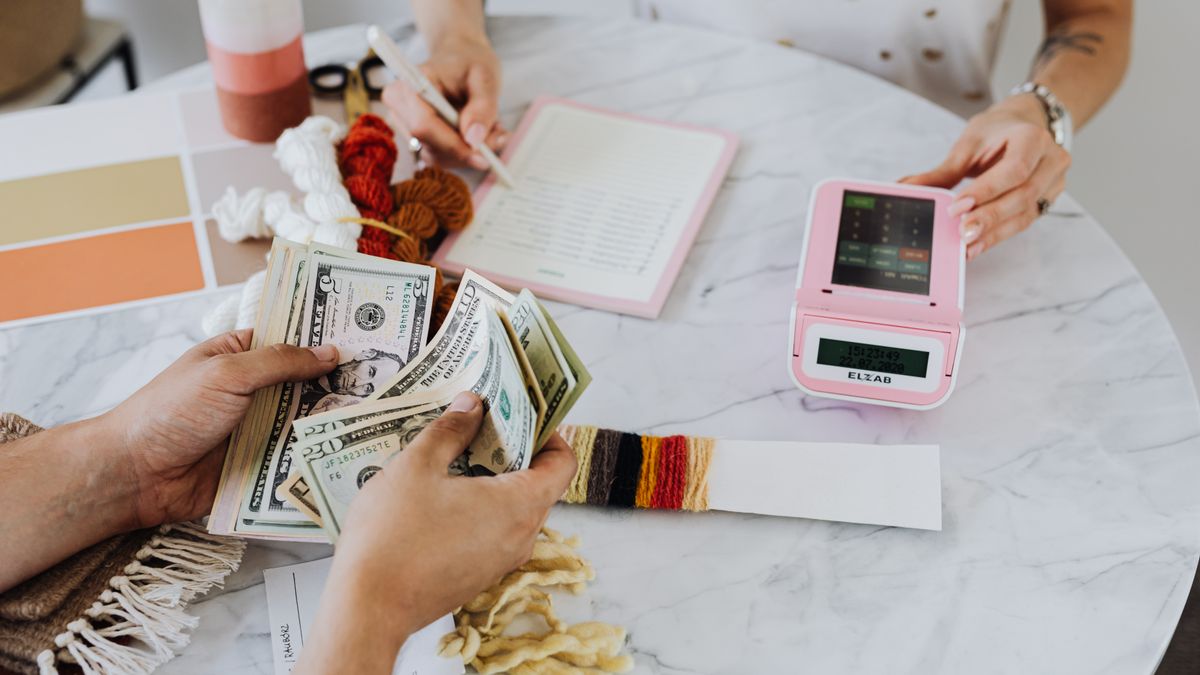
Paper envelopes work because empty means empty. Digital life still needs that constraint. You do not need physical cash; you need named balances that go to zero without silently borrowing from rent.
Core idea
At the start of a pay period, divide spending money into categories. Spend only what is in a category. When “groceries” is at $0, groceries wait — or you make a conscious transfer from another envelope.
Fixed bills (rent, insurance) can sit outside envelopes if they are already scheduled. Envelopes shine for variable spend: groceries, dining, gas, fun, personal.
Setup options
A. Bank “spaces” / sub-savings — move category money into labeled pots; spend from checking but refill logic stays visible.
B. One checking account + spreadsheet — columns for each envelope; update after purchases (pairs well with 30-day tracking).
C. Budgeting app with category balances — fine if you already like the app; this lab stays tool-agnostic.
Worked biweekly example
Sam’s variable budget between paychecks: $520.
| Envelope | Amount |
|---|---|
| Groceries | $220 |
| Dining / coffee | $70 |
| Gas | $90 |
| Fun | $80 |
| Personal / household misc | $60 |
| Total | $520 |
Payday morning, Sam records those starting balances. Thursday grocery run $94.12 → groceries $125.88. Saturday dinner $48 → dining $22. The numbers are blunt on purpose.
Zero-sum transfers
Dining hits $0 on Wednesday. Sam wants pizza. Options:
- Skip pizza.
- Move $20 from Fun → Dining (Fun becomes $60).
- Wait for next payday.
What Sam does not do: put pizza on a card and ignore it. That recreates the problem envelopes solve. If a card is the payment rail, the envelope still decrements the same day — see statement habits.
Month boundaries vs payday boundaries
Envelopes reset on your pay rhythm, not necessarily the 1st. If paid biweekly, a calendar month may contain two or three resets. Do not panic when a long month “feels” more expensive; count pay periods.
Annual costs do not belong in Fun. They belong in sinking funds.
A week inside Sam’s sheet
| Day | Event | Envelope after |
|---|---|---|
| Mon (payday) | Fund all five | Groceries $220 · Dining $70 · … |
| Tue | Pack lunch, no spend | Unchanged |
| Thu | Groceries $94.12 | Groceries $125.88 |
| Sat | Dinner $48 | Dining $22 |
| Sun | Coffee meetup $9 | Dining $13 |
| Wed | Dining empty idea | Transfer $15 from Fun or skip |
| Next payday | Reset to table amounts | Fresh cycle |
Sam also keeps $40 in Personal for soap, lightbulbs, and pharmacy odds. When Personal runs out, household misc waits — it does not raid Groceries unless Sam consciously moves $10 and notes why.
Card payments without breaking the rule
Most people will not withdraw cash for every latte. Fine. Use a debit or credit card, then decrement the envelope the same evening. If you wait until statement day, you are back to fog.
A workable rule: any variable charge over $15 gets logged before bed. Under $15 gets batched in a phone note and cleared every other day. The method dies when “I’ll catch up Sunday” becomes never.
Digital tips that preserve the friction
- Rename accounts or spreadsheet tabs with remaining balances (
groceries-126). - Turn off one-click saved cards for dining merchants if impulse is the issue.
- Weekly 10-minute reconcile: envelopes vs bank outflow.
- Shared household: one “owner” updates balances, or both update a shared sheet the same day (partner talk).
- Color a cell red at $0 so empty is visible without opening five apps.
When envelopes fail
- Caps set from wishful thinking instead of a tracked baseline. Run 30 days of tracking first if your grocery number is a guess.
- Too many categories (12 envelopes you abandon by week two). Start with four.
- Mixing emergency savings into “misc.” Keep emergency cash separate.
- Resetting envelopes early every time you overspend — that is a larger budget problem, maybe a 50/30/20 redo.
- Treating “Personal” as an infinite dump drawer. Cap it; open a sinking fund for planned gear instead.
A minimal starter kit
- Choose four variable categories.
- Fund them on payday as part of your payday routine.
- Decrement same day.
- Review Sunday for two minutes.
- After two full pay cycles, adjust caps by $10–20 — not by $100 — unless life changed (new commute, new diet).
Empty digital envelopes should feel slightly annoying. That annoyance is the feature.